-
Shop
- Advanced Technologies
- AI Skills
- AI Skills Mastery 2026 Collection
- Bathroom
- Best-Sellers
- Car Accessories
- Confidence
- Dating & Social Skills
- Digital Resources
- AI & Technology
- Beauty
- Budgeting & Saving
- Car Buying & Ownership
- Electronics & Technology
- Entrepreneurship & Business Growth
- Financial Independence
- Financial Mindset & Psychology
- Goal Setting
- Home Styling & Organization
- Kitchen & Recipes
- Leadership
- Mindset
- Online Business
- Parenting & Child Development
- Personal Style & Fashion
- Pet Lifestyle & Wellness
- Positive Thinking
- Sleep Improvement
- Smart Life with AI
- Stress Management & Relaxation
- Wellness
- Yoga & Mind-Body Practices
- Education & Learning
- Family & Parenting
- Fashion
- Financial Education
- Furniture
- Gadgets
- Health & Beauty
- Health & Wellness
- Home & Garden
- Home Electronics
- Kids & Babies
- Kitchen
- Kitchen Best-Sellers
- Lighting
- Luxury Brands Collection
- Patio, Lawn & Garden
- Personal Growth
- Pet Care
- Pet Supplies
- Pets
- Sport & Outdoors
- Stress Relief & Relaxation
- Travel
- Travel & Adventure
- Wealth
- Popular
- Best deals
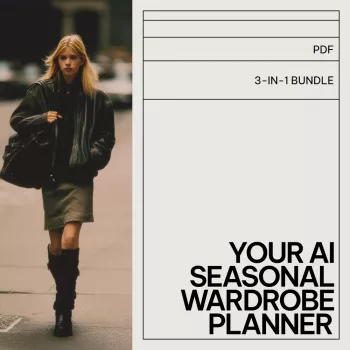
AI Seasonal Wardrobe Planner: Outfits & Clutter Control

Your Closet, But With a Plan for Every Season
Seasonal shifts can make closets feel chaotic: too many pieces, not enough outfits, and repeat purchases that don’t get worn. Your AI Seasonal Wardrobe Planner Bundle – Plan Your Wardrobe Smarter for Every Season is built to turn what you already own into a clear, season-by-season plan—so outfits come together faster, shopping becomes more intentional, and storage stays manageable year-round.
Instead of relying on memory (or panic-buying “just in case”), you’ll use a simple system: inventory what you own, set seasonal rules, build outfit lineups, and keep a short, practical gap list. The result is a wardrobe that works with your real weather, schedule, and style—without feeling restrictive.
What the Bundle Is Designed to Solve
- Outfit fatigue: fewer “nothing to wear” moments through pre-planned combinations.
- Overbuying: identify gaps versus duplicates before adding anything new.
- Seasonal clutter: rotate, store, and track items so off-season pieces stop taking over.
- Inconsistent style: keep a cohesive look while adapting to weather and occasions.
- Wasted time: reduce morning decision-making with ready-to-use outfit lineups.
Planning also supports more responsible consumption. Textile waste is a real issue, and wearing what you own more often is one of the most practical levers available at the individual level. For background data, see the U.S. Environmental Protection Agency (EPA) textiles materials data and sustainability guidance from the Council of Fashion Designers of America (CFDA).
How an AI-Assisted Seasonal Plan Works in Real Life
1) Inventory what you actually own
List your items by category (tops, bottoms, layers, shoes, accessories). Add quick notes on fit, comfort, and condition so the plan reflects reality—not wishful thinking.
2) Set season rules that match your life
Define your weather range and lifestyle needs: commute versus remote work, office dress codes, weekend activities, travel frequency, and how often you do laundry. This keeps your capsule functional, not aspirational.
3) Build outfits around “core” anchors
Generate outfit sets that start with versatile core items (great jeans, a reliable blazer, a favorite sneaker) and then add seasonal accents (a spring trench, a summer sandal, a winter boot). This is how you get variety without endless pieces.
4) Create a rotation plan
Decide what stays accessible now, what moves to storage, and what needs repair or tailoring. One small fix (hemming, replacing buttons, resoling shoes) can bring multiple outfits back into rotation.
5) Add shopping guardrails
Keep a short “only-if-needed” list tied to outfit gaps rather than impulse browsing. If a new item doesn’t complete at least two outfits you’d wear this month, it’s usually not a need.
Season-by-Season Blueprint: What to Prioritize
- Spring: transitional layers, breathable knits, lightweight outerwear, rain-ready footwear.
- Summer: heat-friendly fabrics, sun protection pieces, sweat-proof styling, wash-and-wear staples.
- Fall: layering system (base–mid–outer), closed-toe shoes, richer color palette, texture mixing.
- Winter: insulation strategy, moisture management, weatherproof outer layers, indoor/outdoor outfit swaps.
- Year-round: reliable core basics, comfortable shoes, and accessories that upgrade multiple looks.
Quick seasonal focus guide
| Season | Core pieces to lean on | Common gap to watch for | Easy upgrade that changes outfits |
|---|---|---|---|
| Spring | Light jacket, mid-weight knit, ankle boots/sneakers | Rain layer + water-resistant shoes | Scarf or lightweight trench |
| Summer | Breathable tops, shorts/skirts, sandals | One polished outfit for events | Structured bag + sunglasses |
| Fall | Cardigans, denim, boots | A true outer layer for cold mornings | Layering tee/turtleneck |
| Winter | Coat, warm knitwear, boots | Thermal base layers + gloves | Weatherproof coat or boot upgrade |
Building a Seasonal Capsule Without Feeling Restricted
- Start with a “core 10–15” that matches your most frequent activities and preferred silhouettes.
- Use a simple color structure: three neutral base colors plus one or two seasonal accents to keep mixing effortless.
- Lean on repeatable outfit formulas: knit + tailored bottom + outerwear; tee + denim + statement shoe; dress + layer + boot.
- Keep a small “wild card” zone: three to five pieces that add personality without breaking coordination.
- Use comfort as a filter: if it requires constant adjusting, special underlayers, or discomfort, mark it as a replacement candidate.
For many people, the hardest part isn’t planning—it’s making the plan easy to follow. A dedicated getting-ready space can help you stay consistent with daily outfit choices and accessory organization. If your mornings feel scattered, consider a setup that supports quick decisions, like the Modern White Vanity Makeup Table Set with Lighted Mirror and Storage.
Making the Plan Stick: Habits That Keep Closets Under Control
Who This Bundle Fits Best
Getting Started in 30 Minutes
If you want a structured, season-by-season system that turns your existing closet into outfits you’ll actually wear, start with Your AI Seasonal Wardrobe Planner Bundle and build one season at a time.
FAQ
Does a seasonal wardrobe plan work if the weather changes a lot day to day?
Yes—build your capsule around a layering system and keep a small set of transitional items (light jacket, medium-weight knit, closed-toe shoe option) accessible year-round. That way, you’re adjusting layers, not reinventing outfits each morning.
How many pieces are enough for a seasonal capsule?
A practical range is often 25–40 pieces per season, depending on lifestyle, laundry frequency, and dress codes. Start smaller and add only when you can name the exact outfits the new piece will complete.
What should be done with items that never get worn but feel hard to let go of?
Use a “quarantine” bin for a set period and only bring items back if they meet clear criteria: fit, comfort, versatility, and realistic occasions to wear them. If they still don’t earn a place, consider tailoring, selling, donating, or recycling based on condition.











Leave a comment