-
Shop
- Advanced Technologies
- AI Skills
- AI Skills Mastery 2026 Collection
- Bathroom
- Best-Sellers
- Car Accessories
- Confidence
- Dating & Social Skills
- Digital Resources
- AI & Technology
- Beauty
- Budgeting & Saving
- Car Buying & Ownership
- Electronics & Technology
- Entrepreneurship & Business Growth
- Financial Independence
- Financial Mindset & Psychology
- Goal Setting
- Home Styling & Organization
- Kitchen & Recipes
- Leadership
- Mindset
- Online Business
- Parenting & Child Development
- Personal Style & Fashion
- Pet Lifestyle & Wellness
- Positive Thinking
- Sleep Improvement
- Smart Life with AI
- Stress Management & Relaxation
- Wellness
- Yoga & Mind-Body Practices
- Education & Learning
- Family & Parenting
- Fashion
- Financial Education
- Furniture
- Gadgets
- Health & Beauty
- Health & Wellness
- Home & Garden
- Home Electronics
- Kids & Babies
- Kitchen
- Kitchen Best-Sellers
- Lighting
- Luxury Brands Collection
- Patio, Lawn & Garden
- Personal Growth
- Pet Care
- Pet Supplies
- Pets
- Sport & Outdoors
- Stress Relief & Relaxation
- Travel
- Travel & Adventure
- Wealth
- Popular
- Best deals
5–6kW Low-Speed Wind Turbine: Efficient Small-Scale Power
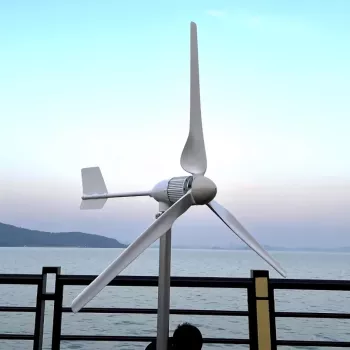
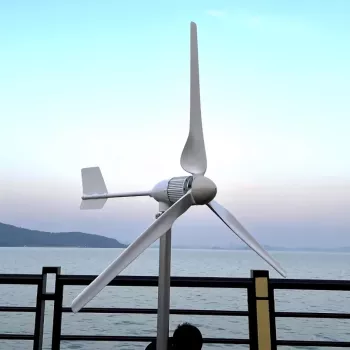
High-Efficiency 5KW–6KW Low-Speed Wind Turbine for Reliable Small-Scale Power
A low-speed wind turbine in the 5KW–6KW range is built to begin producing usable energy in gentler winds while staying steady as conditions shift. For small properties, remote sites, and hybrid renewable systems, the right turbine can reduce generator runtime, support critical loads, and add energy resilience—provided the site, tower height, and electrical components are designed as a complete system.
Where a 5KW–6KW Low-Speed Wind Turbine Fits Best
This size class is often the “sweet spot” for practical on-site generation without stepping into utility-scale complexity. It’s commonly used for:
- Off-grid cabins, farms, workshops, and remote equipment sites that need dependable on-site power and backup capability.
- Hybrid systems with solar and batteries to balance seasonal swings (windier nights and winters often complement solar patterns).
- Moderate wind locations where a low-speed design can start charging earlier than turbines with higher cut-in thresholds.
- Users upgrading from micro wind who want a compact, scalable step between sub‑1KW turbines and large tower-based systems.
Key Performance Factors That Drive Real-World Output
Nameplate power (5KW–6KW) is only one part of the story. Real production depends on how the turbine behaves across the wind speeds your site actually experiences.
- Cut-in behavior: Earlier startup at lower wind speeds can increase daily energy capture, especially when winds are variable rather than consistently strong.
- Rated power vs. energy: Rated output is specified at a particular wind speed; annual kWh depends on your wind regime, air density, and tower height.
- Rotor swept area and blade design: A larger swept area and efficient airfoils generally improve low-speed harvesting and reduce “dead time.”
- Generator and controller efficiency: Rectification, conversion, wiring, and battery/inverter losses can materially reduce delivered power compared to turbine output.
- Noise and vibration: Low-speed operation can reduce perceived noise, but tower stiffness, precise balancing, and proper mounting remain essential for longevity.
For deeper background on small wind system performance and expectations, see the NREL Small Wind Electric Systems consumer guide and the U.S. Department of Energy Small Wind Guidebook.
Site Assessment: Wind, Height, and Obstacles
The same turbine can perform dramatically differently depending on exposure and tower height. Before ordering equipment, confirm the basics:
- Measure or estimate wind at hub height: Use wind maps, nearby weather stations, or (best) site anemometer data to validate average speeds where the rotor will actually sit.
- Prioritize height: Wind speed generally increases with elevation; a taller tower can outperform a larger turbine placed too low.
- Avoid turbulence: Position the turbine well above nearby trees and buildings. Turbulent flow reduces energy capture and accelerates wear on blades, bearings, and yaw components.
- Plan the footprint: Account for guy wires (if used), setback distances, and safe access for maintenance or controlled lowering/raising procedures.
Standards and design practices vary by region and use case; for an overview of wind turbine standardization, reference the IEC 61400 wind turbine standards overview.
System Components Needed for a Complete Setup
A wind turbine is only one part of a working power system. Most installations require a correctly sized tower and foundation, protection and control hardware, and (for off-grid use) storage and inversion.
Typical Wind Turbine System Building Blocks (Planning Checklist)
| Component | Purpose | What to verify before buying/installation |
|---|---|---|
| Tower & mounting hardware | Elevates turbine into cleaner, faster wind | Height, load rating, corrosion resistance, service access |
| Controller / rectifier | Regulates charging and protects from overspeed | Voltage compatibility, diversion support, thermal rating |
| Dump load (if required) | Absorbs excess power to prevent overvoltage | Wattage rating, safe placement, ventilation |
| Batteries (optional) | Stores energy for use when wind is low | Capacity (kWh), chemistry, temperature limits, BMS needs |
| Inverter (optional) | Converts DC to household AC | Surge rating, waveform, efficiency, standby draw |
| Wiring, grounding, disconnects | Safety and loss reduction | Wire gauge, fuse/breaker sizing, grounding plan, lightning protection |
Installation and Safety Considerations
What to Check Before Purchasing a 5KW–6KW Low-Speed Turbine
Product Option: High-Efficiency 5KW–6KW Low-Speed Wind Turbine
For small-scale generation where improved low-speed performance can help capture more energy during moderate wind periods, consider the High-Efficiency 5KW–6KW Low-Speed Wind Turbine (in stock). It’s a practical fit for off-grid or hybrid setups when paired with the appropriate controller, wiring/protection, and (if needed) batteries and an inverter sized to your loads.
Other in-stock items
- The Smart Bundle to Avoid Travel Scams: 3-in-1 Digital Guide, Checklist & AI Tools
- Modern White Vanity Makeup Table Set with Lighted Mirror and Storage
- Easy Online Store Setup Bundle: 4-in-1 Guide to Social Store, Google Console, and More
FAQ
How much power can a 5KW–6KW low-speed wind turbine produce in a day?
Daily kWh depends on average wind speed at hub height, turbulence, tower height, and system losses—not the 5KW–6KW rating alone. A practical estimate uses a capacity factor approach: average daily energy ≈ (rated kW) × (24 hours) × (expected capacity factor based on your site).
Do low-speed wind turbines work in areas with gusty, inconsistent wind?
They can perform better than higher cut-in designs because they may begin producing sooner during lighter winds, but turbulence and chaotic gusts can reduce efficiency and increase wear. A taller tower in clean airflow, plus proper controller protection and a solid shutdown strategy, typically matters more than chasing peak gust output.
What else is needed besides the turbine to run household loads?
Most systems need a tower/foundation, controller/rectifier (and often a dump load), wiring and safety disconnects, grounding and surge protection, and—if powering typical home AC circuits—an inverter. Off-grid setups commonly add a battery bank sized to daily loads and desired autonomy, while grid-tie or hybrid designs depend on the specific interconnection equipment used.













Leave a comment