-
Shop
- Advanced Technologies
- AI Skills
- AI Skills Mastery 2026 Collection
- Bathroom
- Best-Sellers
- Car Accessories
- Confidence
- Dating & Social Skills
- Digital Resources
- AI & Technology
- Beauty
- Budgeting & Saving
- Car Buying & Ownership
- Electronics & Technology
- Entrepreneurship & Business Growth
- Financial Independence
- Financial Mindset & Psychology
- Goal Setting
- Home Styling & Organization
- Kitchen & Recipes
- Leadership
- Mindset
- Online Business
- Parenting & Child Development
- Personal Style & Fashion
- Pet Lifestyle & Wellness
- Positive Thinking
- Sleep Improvement
- Smart Life with AI
- Stress Management & Relaxation
- Wellness
- Yoga & Mind-Body Practices
- Education & Learning
- Family & Parenting
- Fashion
- Financial Education
- Furniture
- Gadgets
- Health & Beauty
- Health & Wellness
- Home & Garden
- Home Electronics
- Kids & Babies
- Kitchen
- Kitchen Best-Sellers
- Lighting
- Luxury Brands Collection
- Patio, Lawn & Garden
- Personal Growth
- Pet Care
- Pet Supplies
- Pets
- Sport & Outdoors
- Stress Relief & Relaxation
- Travel
- Travel & Adventure
- Wealth
- Popular
- Best deals
Valentino’s Long Game: Couture Codes That Built a House
Valentino’s Story: From Atelier Beginnings to a Global Couture Powerhouse
Valentino is often summarized by a single shade of red, but the house’s rise was shaped by disciplined couture technique, smart patronage, and a brand identity built to last across decades of shifting fashion leadership. Valentino Garavani’s career shows how a designer’s taste can become an institution: not by chasing constant reinvention, but by turning elegance into a system—codes, craft standards, and a consistent emotional promise that clients learn to trust. For more guidance, see Valentino (fashion designer).
Valentino Garavani: the maker behind the name
Valentino Garavani’s early ambition was paired with formal training and formative exposure to Parisian couture traditions—an education that sharpened his obsession with line, finish, and fit. Couture, at its core, is a discipline of decisions: where a seam lands, how a sleeve hangs, how a fabric behaves in motion. Those priorities helped Valentino develop an approach that felt elevated without being loud. For further reading, see VALENTINO: THE LEGACY OF THE GREAT.
What made his aesthetic endure was its repeatability. Elegance, restraint, and romance weren’t treated as seasonal themes; they became a stable signature that could be applied again and again with subtle variation. That consistency—rather than one-off spectacle—made the work recognizable and dependable for clients who wanted timeless glamour.
Just as important were relationships. Patronage and social visibility gave a young designer credibility faster than pure merit could. In luxury, perception and access matter: the right client, photographed at the right moment, can function like a seal of approval that expands demand beyond the atelier.
Founding years and the first identity of the house
From the beginning, the house was positioned around couture-level craftsmanship and an instantly legible style language. The atelier model rewarded precision: a steady, controlled environment where standards could be enforced and refined. Clients were buying more than clothing—they were buying an experience of discretion, personal service, and confidence that the final result would be flawless.
That early discipline also produced brand assets long before “brand building” became a corporate phrase. A clear silhouette philosophy, polished communications, and a coherent luxury environment made it easier for clients and press to understand what the house stood for. When taste is consistent, the market does part of the marketing: people learn what to expect, and that expectation becomes the brand.
Couture evolution: what changed, what stayed constant
Valentino’s couture evolved with cultural mood—proportions shifted, decoration rose or receded, and references adapted to new eras of glamour. What stayed constant was the commitment to refined occasion dressing and the technical confidence that couture requires. Even when surfaces changed—beading, lacework, embroidery—the underlying message remained recognizable: elevated romance, expertly controlled.
Couture functioned as the house’s research lab. Techniques tested at the highest level (construction methods, rare materials, symbolic details) could later inform broader lines. This is one reason couture matters even when it’s not the primary revenue driver: it creates the vocabulary that makes ready-to-wear and accessories feel like they belong to the same world.
As recognition scaled, the house maintained atelier standards while using runway moments, red-carpet dressing, and press coverage to amplify its codes. Visibility worked best when it reinforced what was already true—when a headline-making gown still looked unmistakably like the brand, not like a detour.
Key eras and what they reveal about brand building
| Era | What defined the style | What the business learned |
|---|---|---|
| Early couture rise | Clean, elegant lines; meticulous finishing; a distinct sense of occasion | A tight point of view builds trust faster than broad experimentation |
| Global recognition | Iconic gowns, celebrity dressing, and clear house codes | Visibility works best when it reinforces a consistent signature |
| Modern luxury phase | Heritage cues reinterpreted for contemporary markets | Heritage becomes an asset when translated, not merely repeated |
House codes: the elements that made Valentino recognizable
In enduring luxury houses, “codes” aren’t vague vibes—they are repeatable design and communication choices that create recognition at a glance. For Valentino, color became a decisive identity tool. “Valentino red” operates as shorthand for the brand’s emotional promise: drama with polish, romance without chaos, and presence without forcing it.
Silhouette and surface complete the message. Tailoring and drape communicate control; embellishment communicates investment. Whether minimal or ornate, the work signals refinement through proportion, finishing, and an overall sense of composure. House codes also extend beyond clothing: show staging, photography, typography, and retail experience align to the same mood, so the client’s impression is consistent from runway to boutique.
From designer-led to institution: leadership, ownership, and continuity
Business lessons from Valentino’s long game
Recommended digital reads (in stock)
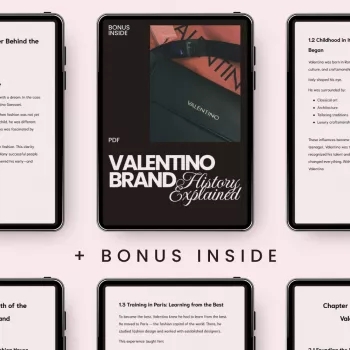
- Valentino Brand History Explained eBook (digital download)
- Easy Online Store Setup Bundle: 4-in-1 Guide to Social Store, Google Console, and More
What the eBook includes and who it’s for
Download details and a simple reading plan
Sources for further reading
- Valentino Official Website
- Encyclopaedia Britannica — Valentino Garavani
- Vogue — Valentino
FAQ
What is Valentino best known for in couture?
Valentino is best known for refined elegance, impeccable construction, and glamorous gowns that reinforce consistent house codes—especially a confident use of signature color and polished finishing. The couture identity emphasizes controlled romance rather than trend-driven shock value.
Is this a physical book or a digital download?
It is an eBook digital download. That format typically offers instant access, portable reading across devices, and easy search or reference when revisiting specific eras or lessons.
Who is this Valentino history eBook best for?
It’s a strong fit for fashion students, luxury enthusiasts, and anyone studying how creative direction becomes a durable brand system. It also suits entrepreneurs and brand strategists looking for practical lessons on signature building, quality control, and long-term positioning.
Recommended for you

Cozy Meal Ideas: Soups, Chili, Pasta Bakes & More
Jul 29, 2026












Leave a comment