-
Shop
- Advanced Technologies
- AI Skills
- AI Skills Mastery 2026 Collection
- Bathroom
- Best-Sellers
- Car Accessories
- Confidence
- Dating & Social Skills
- Digital Resources
- AI & Technology
- Beauty
- Budgeting & Saving
- Car Buying & Ownership
- Electronics & Technology
- Entrepreneurship & Business Growth
- Financial Independence
- Financial Mindset & Psychology
- Goal Setting
- Home Styling & Organization
- Kitchen & Recipes
- Leadership
- Mindset
- Online Business
- Parenting & Child Development
- Personal Style & Fashion
- Pet Lifestyle & Wellness
- Positive Thinking
- Sleep Improvement
- Smart Life with AI
- Stress Management & Relaxation
- Wellness
- Yoga & Mind-Body Practices
- Education & Learning
- Family & Parenting
- Fashion
- Financial Education
- Furniture
- Gadgets
- Health & Beauty
- Health & Wellness
- Home & Garden
- Home Electronics
- Kids & Babies
- Kitchen
- Kitchen Best-Sellers
- Lighting
- Luxury Brands Collection
- Patio, Lawn & Garden
- Personal Growth
- Pet Care
- Pet Supplies
- Pets
- Sport & Outdoors
- Stress Relief & Relaxation
- Travel
- Travel & Adventure
- Wealth
- Popular
- Best deals
Hermès Fake Check: Insider Checklist for Smart Buyers

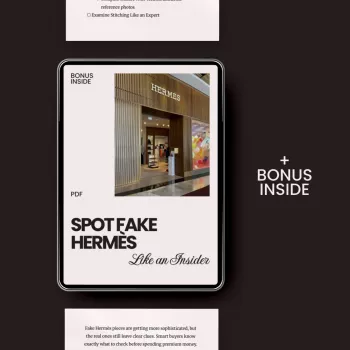
Spot Fake Hermès Like an Insider: A Practical Authentication Checklist for Smart Buyers
Hermès counterfeits have become convincingly detailed—especially in online resale listings where photos, filters, and vague descriptions can hide red flags. A fast, repeatable checklist helps reduce risk before money changes hands. Use the steps below to vet listings, request the right proof, and recognize common counterfeit patterns across bags, small leather goods, and accessories.
Start With the Listing: Signals Before You Zoom In
Before analyzing stamps or stitching, scan the listing itself. Many bad buys are avoidable by catching high-risk behaviors early—especially when a seller is trying to rush payment or limit what you can verify.
- Price reality check: extreme discounts, “urgent sale,” or “must go today” language often correlates with higher risk. Hermès resale pricing varies, but “too good to be true” is rarely a lucky break.
- Seller transparency: consistent selling history, clear return policy, and willingness to provide extra photos/videos matter more than a polished caption.
- Photo quality patterns: watch for repeated images across multiple sellers, stock-like backgrounds, heavy smoothing filters, or cropped-out areas where stamps and hardware should be visible.
- Description specificity: authentic listings typically include exact model name, size, color, leather type, hardware finish, year/letter code where applicable, and a detailed condition report.
- Payment and shipping: pressure to use wire transfer, gift cards, or off-platform payment is a major warning sign.
Quick Triage: Low-Risk vs High-Risk Listing Behaviors
| Checkpoint | Lower-risk signs | Higher-risk signs |
|---|---|---|
| Pricing | Matches market range for condition and rarity | Too-good-to-be-true discount or “final price today” pressure |
| Photos | Multiple angles, close-ups of stamp/hardware/stitching | Few photos, blurry close-ups, watermark from another seller |
| Seller response | Answers promptly and provides requested proof | Deflects, delays, or refuses close-ups/video |
| Provenance | Receipt details, boutique info, or reputable entrupy-style report | Only generic “authentic guaranteed” claim |
| Return terms | Clear returns/authentication window | No returns; threatens to cancel if questioned |
Materials & Craftsmanship Checks That Counterfeits Struggle to Match
Even when a replica looks convincing at a glance, the “feel” and finishing quality often fall apart under close inspection. If a seller can’t provide detailed close-ups, treat that as information—not an inconvenience.
- Leather hand-feel and structure: authentic Hermès leather typically has a rich, natural grain with consistent suppleness. Counterfeits may feel plasticky, overly stiff, or unnaturally uniform.
- Stitching discipline: examine stitch angles, spacing, and tension. Sloppy backstitching, uneven thread thickness, or wavering lines are frequent tells in counterfeit production.
- Edge paint and glazing: look for smooth, even edging without bubbling, cracking, or thick “puddled” paint at corners and handles.
- Hardware weight and finish: authentic hardware usually feels substantial and cleanly finished. Fakes can have sharp edges, lightweight feel, or mismatched tones between pieces.
- Smell and color: harsh chemical odor, dye transfer, or odd undertones can indicate lower-quality materials and shortcuts.
Stamps, Markings, and Typography: What to Inspect Up Close
Stamps are a common obsession—and a common trap. Counterfeiters copy stamp text, but many still miss subtleties in depth, alignment, and letter shapes. Ask for macro-level photos taken in natural light (not flash).
- Brand stamp clarity: check depth, spacing, and crispness. Counterfeits often look too bold, too shallow, or inconsistent across letters.
- Placement and alignment: stamps that sit too high/low or appear off-center can be suspicious depending on model and year.
- Font characteristics: compare letter shapes, accent marks, and spacing. Counterfeit fonts often look slightly “off” when magnified.
- Blind stamps/date codes: confirm format and consistency. Mismatched eras or odd combinations can signal a replica or altered item.
- Hardware engravings: inspect engraving depth and cleanliness on clasps, buckles, and zipper pulls where applicable.
Construction Details by Category: Bags, SLGs, and Accessories
Different Hermès categories have different “stress points” where replicas tend to reveal themselves. Use category-specific checks to narrow your focus instead of trying to scrutinize everything at once.
- Bags: scrutinize handle symmetry, flap alignment, closure fit, sangles/straps consistency, and how the bag stands/holds shape on a flat surface.
- Small leather goods (wallets, cardholders): check interior edge finishing, fold tension, snap quality, and lining precision.
- Belts: verify buckle finishing, engraving, edge paint quality, and whether holes are cleanly cut and evenly spaced.
- Scarves: look at hem rolling consistency, print crispness, and color saturation. Uneven rolling and muddy prints are common issues in fakes.
- Zippers and pulls: ensure smooth action and consistent finish. Gritty movement and discoloration around hardware can be a warning.
Proof to Request Before Buying (Especially Online)
For brand guidance and anti-counterfeiting information, reference Hermès. For broader consumer safety tips on counterfeit goods and shopping scams, consult U.S. Customs and Border Protection and the Federal Trade Commission.
A Simple Decision Flow to Avoid Costly Mistakes
Downloadable Checklist for On-the-Go Verification
- Digital download: Spot Fake Hermès Like an Insider – Luxury Authentication Checklist & Guide (Digital Download)
- Extra protection for online transactions: The Smart Bundle to Avoid Travel Scams: 3-in-1 Digital Guide, Checklist & AI Tools
FAQ
What are the fastest signs a Hermès item might be fake?
Pricing pressure, refusal to provide close-ups or a handheld video, and vague descriptions are early warning signs. On the item itself, mismatched hardware tones, sloppy stitching, and unclear or inconsistent stamp/engraving photos are common red flags.
Do boxes, dust bags, and receipts prove authenticity?
No—packaging can be replicated, and receipts can be incomplete, reused, or unrelated to the item shown. Treat these as supporting evidence and prioritize item-based inspection plus verification options that allow returns if authentication fails.
Is a third-party authentication still necessary if the seller guarantees authenticity?
A seller guarantee can be meaningful, but it depends on enforcement and whether you can return the item after verification. For higher-value purchases, independent authentication paired with a clear return window reduces risk substantially.















Leave a comment