-
Shop
- Advanced Technologies
- AI Skills
- AI Skills Mastery 2026 Collection
- Bathroom
- Best-Sellers
- Car Accessories
- Confidence
- Dating & Social Skills
- Digital Resources
- AI & Technology
- Beauty
- Budgeting & Saving
- Car Buying & Ownership
- Electronics & Technology
- Entrepreneurship & Business Growth
- Financial Independence
- Financial Mindset & Psychology
- Goal Setting
- Home Styling & Organization
- Kitchen & Recipes
- Leadership
- Mindset
- Online Business
- Parenting & Child Development
- Personal Style & Fashion
- Pet Lifestyle & Wellness
- Positive Thinking
- Sleep Improvement
- Smart Life with AI
- Stress Management & Relaxation
- Wellness
- Yoga & Mind-Body Practices
- Education & Learning
- Family & Parenting
- Fashion
- Financial Education
- Furniture
- Gadgets
- Health & Beauty
- Health & Wellness
- Home & Garden
- Home Electronics
- Kids & Babies
- Kitchen
- Kitchen Best-Sellers
- Lighting
- Luxury Brands Collection
- Patio, Lawn & Garden
- Personal Growth
- Pet Care
- Pet Supplies
- Pets
- Sport & Outdoors
- Stress Relief & Relaxation
- Travel
- Travel & Adventure
- Wealth
- Popular
- Best deals
Everyday Kitchen Toolkit: Zones, Essentials & Time-Savers
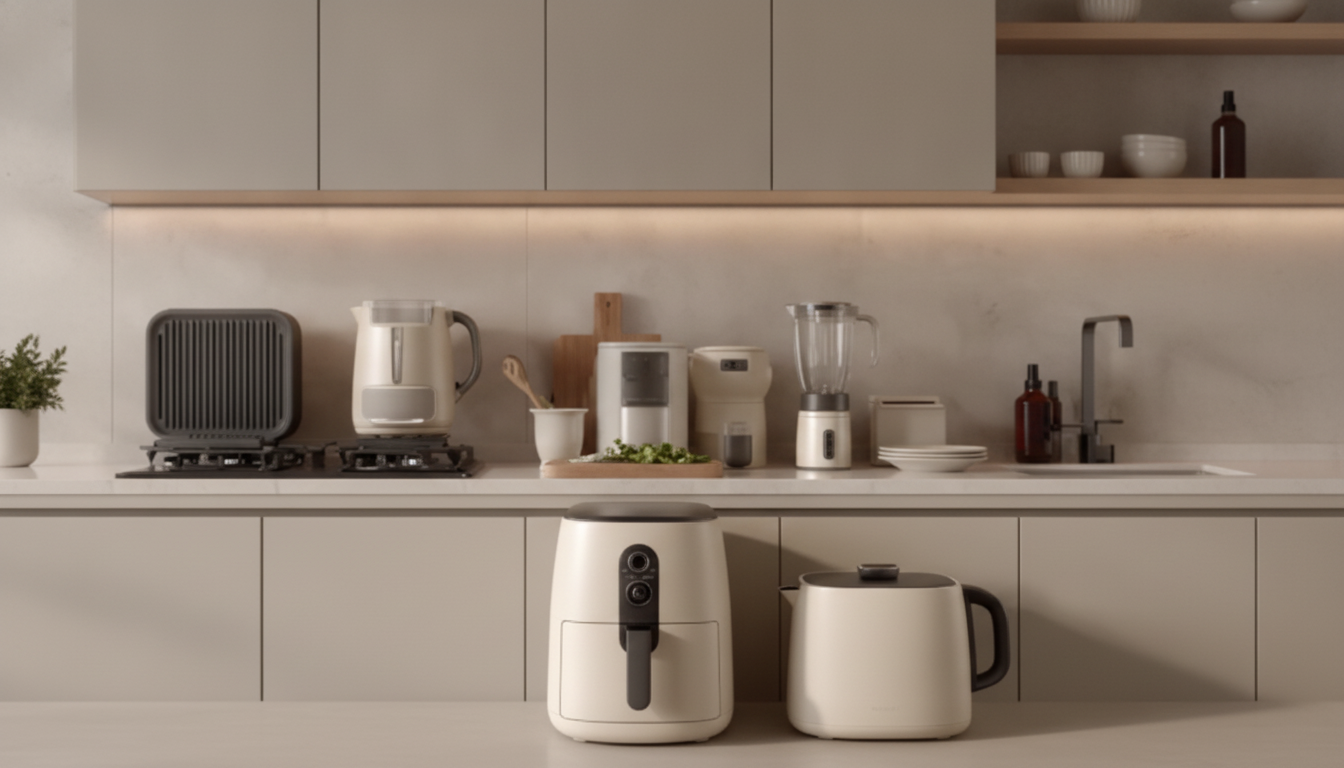
The Everyday Cook’s Kitchen Toolkit: Smart Flow, Simple Wizardry, and the Gadgets That Earn Their Space
A kitchen that feels effortless is usually a kitchen that’s been set up for flow: the right tools in the right places, a repeatable prep routine, and a few “small magic” gadgets that remove friction. This guide maps out a practical toolkit for everyday cooking—organized by how people actually move through prep, cook, serve, and clean—so meals get easier without turning the counter into a clutter museum.
A smart kitchen flow in four zones
Instead of buying random gadgets, set up your space like a simple system. Think in zones based on how dinner actually happens.
Prep zone
Chopping, mixing, measuring—keep knives, boards, bowls, and towels within one step. If you’re constantly walking across the kitchen for a whisk or salt, prep drags and cleanup multiplies.
Cook zone
Stovetop/oven tools—tongs, spatulas, thermometer, lids, sheet pans—stored near heat. When tools live where they’re used, you stop juggling hot pans while searching drawers.
Serve zone
Plating, storage, portioning—ladles, serving spoons, containers, labels. This zone is what keeps “dinner” from turning into “everyone hovering while food cools.”
Clean zone
Sink/dishwasher workflow—scraper, brush, drying rack, and a “landing spot” for dirty tools to avoid pileups. A small tray or bin by the sink can prevent the dreaded countertop avalanche.
The core toolkit: the few things used every day
These are the pieces that show up in weeknight cooking again and again. If you only upgrade a handful of items, start here.
- Chef’s knife + paring knife: covers 90% of cutting tasks; keep them sharp and easy to reach.
- Cutting boards (at least two): one for produce, one for raw proteins; choose stable boards that don’t slide.
- Mixing bowls (nested set): glass or stainless; add one large bowl for salads and batters.
- Measuring set: dry cups, liquid cup, and spoons; store together to prevent “missing tablespoon” syndrome.
- Heat-safe spatula + sturdy tongs: the two tools that touch almost every pan meal.
- Sheet pan + rack: roasting, crisping, and catch-all prep tray; a rack improves airflow and texture.
Everyday essentials and what they replace
| Tool | Best for | Often replaces | Quick buying note |
|---|---|---|---|
| Chef’s knife | Chop, slice, mince | Multiple specialty knives | Comfortable handle and balanced weight matter more than brand |
| Two cutting boards | Safer, faster prep | Constant washing mid-prep | Look for non-slip grip or add a damp towel underneath |
| Instant-read thermometer | Doneness and safety | Guessing + overcooking | Fast read time and easy-to-clean probe |
| Tongs | Turn, toss, serve | Fork scraping pans | Spring tension should feel firm, not flimsy |
| Sheet pan + rack | Roast, bake, crisp | Multiple small trays | Heavy-gauge pan resists warping |
Wizardry gadgets that genuinely save time (not just drawer space)
Some tools feel like shortcuts because they remove tiny points of resistance—the same ones that make cooking feel “like a lot.”
- Microplane or fine grater: turns citrus, garlic, ginger, and hard cheese into instant flavor boosts.
- Kitchen scale: improves consistency for baking and meal prep; speeds up measuring and reduces dishes.
- Immersion blender: soups, sauces, and emulsions without transferring hot liquid to a blender jar.
- Salad spinner (or produce dryer): dries greens fast so dressing actually sticks; doubles as a rinse basin.
- Bench scraper: moves chopped food, cleans boards, portions dough, and keeps counters tidy.
Set up a repeatable “one-board” prep routine
A simple routine beats a complicated setup. The goal is to keep your board open, your ingredients staged, and your hands moving forward.
- Start clean and anchored: begin with a cleared board, a towel under it, and a compost/trash bowl beside it.
- Batch knife work: cut aromatics first, then vegetables, then proteins; wipe the board between categories.
- Stage left-to-right: line ingredients up in the order they hit the pan so fewer steps get missed.
- Use a timer as a second brain: one for preheat, one for simmer/roast, one for rest time.
Food safety and cleanliness without slowing down
Speed comes from preventing mess, not rushing through it. A few habits keep cooking moving while reducing risk.
For reliable, up-to-date guidance, refer to the USDA Food Safety and Inspection Service and the FDA Food Safety for Consumers.
A simple storage map that keeps the flow working
When a complete kit makes sense
Shop picks that support an everyday-cooking setup
- The Everyday Cook’s Kitchen Toolkit: Smart Kitchen Flow, Wizardry & Essential Gadgets Guide
- Modern White Vanity Makeup Table Set with Lighted Mirror and Storage (a handy extra storage-and-sorting station in small homes where kitchen space is tight)
FAQ
What are the top 10 kitchen tools used most often for everyday cooking?
A solid top 10 is: chef’s knife, paring knife, two cutting boards, mixing bowls, measuring cups/spoons, tongs, heat-safe spatula, sheet pan (ideally with a rack), instant-read thermometer, plus two high-impact helpers like a microplane and a bench scraper. A few reliable tools beat a drawer full of niche gadgets.
Is a kitchen scale worth it if baking is occasional?
Yes—because it speeds up measuring, improves consistency, and often reduces dirty dishes (you can weigh into one bowl). It’s also great for portioning meal prep, measuring rice, dialing in coffee ratios, and sizing proteins more consistently.
How can a small kitchen keep counters clear while still cooking efficiently?
Use a task-based storage map (tools live where they’re used), keep a “daily driver” drawer, and store boards/pans vertically. During cooking, rely on a one-board prep routine with a scrap bowl so you’re clearing as you go instead of building clutter.
Recommended for you


Best Places to Buy Pearl Earrings: What to Look For
Jul 26, 2026













Leave a comment