-
Shop
- Advanced Technologies
- AI Skills
- AI Skills Mastery 2026 Collection
- Bathroom
- Best-Sellers
- Car Accessories
- Confidence
- Dating & Social Skills
- Digital Resources
- AI & Technology
- Beauty
- Budgeting & Saving
- Car Buying & Ownership
- Electronics & Technology
- Entrepreneurship & Business Growth
- Financial Independence
- Financial Mindset & Psychology
- Goal Setting
- Home Styling & Organization
- Kitchen & Recipes
- Leadership
- Mindset
- Online Business
- Parenting & Child Development
- Personal Style & Fashion
- Pet Lifestyle & Wellness
- Positive Thinking
- Sleep Improvement
- Smart Life with AI
- Stress Management & Relaxation
- Wellness
- Yoga & Mind-Body Practices
- Education & Learning
- Family & Parenting
- Fashion
- Financial Education
- Furniture
- Gadgets
- Health & Beauty
- Health & Wellness
- Home & Garden
- Home Electronics
- Kids & Babies
- Kitchen
- Kitchen Best-Sellers
- Lighting
- Luxury Brands Collection
- Patio, Lawn & Garden
- Personal Growth
- Pet Care
- Pet Supplies
- Pets
- Sport & Outdoors
- Stress Relief & Relaxation
- Travel
- Travel & Adventure
- Wealth
- Popular
- Best deals
Balanced Kids Meals Made Simple: Bundle & Templates
Growing Strong with the Balanced Meals Bundle: A Practical Guide to Healthy Kids Meals
Building healthy kids meals gets easier when there’s a clear framework for balanced plates, predictable routines, and kid-friendly options that still meet nutrition needs. A “balanced” approach doesn’t require fancy recipes or perfect portions—it’s about offering a few key food groups consistently, then letting kids’ appetites and preferences guide how much they eat. Below are practical ways to build balanced breakfasts, lunches, dinners, and snacks, plus an option that can simplify planning when your week is packed.
What “balanced” looks like for kids (without making meals complicated)
A balanced meal for kids can follow a simple plate model: fruits/vegetables + protein + whole grains or starchy vegetables + dairy (or a fortified alternative). Add healthy fats as needed (like olive oil, avocado, nut/seed butters, or nuts for older kids). If you want a reference point, the USDA’s kid-friendly guidance is a helpful visual framework: USDA MyPlate (Kids).
- Prioritize variety over perfection. Instead of “perfect meals,” aim for different colors and food types across the day and week.
- Keep portions flexible. Appetite can swing with growth spurts, activity, and sleep. Offer structure; let kids decide how much to eat.
- Use nutrition anchors. If you’re not sure where to start, build around protein + produce first—then add a grain/starch and dairy/alternative.
How the Balanced Meals Bundle supports healthy meals from planning to plate
When the hardest part is “what do I make that everyone will eat,” a repeatable system matters more than a long list of recipes. Growing Strong with the Balanced Meals Bundle: 5-in-1 Guide to Healthy Kids Meals is designed to reduce decision fatigue by giving families a structured way to build meals in multiple real-life situations.
- Supports busy routines. Useful when you’re juggling picky eating, weeknights, school lunches, and snack requests.
- Encourages meal templates. Mix-and-match components keep grocery lists consistent and help reduce food waste.
- Helps avoid ultra-processed defaults. When time is tight, having a plan makes it easier to lean on quick whole-food building blocks.
For broader pediatric nutrition basics and age-appropriate guidance, the American Academy of Pediatrics is a solid reference: HealthyChildren.org — Nutrition.
Balanced meal templates kids actually accept
Many kids do best with meals that feel familiar. The goal isn’t to eliminate “safe foods”—it’s to use them as a base while slowly expanding variety.
- Use “safe foods” + one “learning food.” Keep a familiar favorite on the plate and add a small portion of something new without pressure.
- Build by components. Instead of one mixed dish, serve a few parts (protein, grain/starch, produce). Kids can choose what to combine.
- Lean on dips and toppings. Yogurt dip, hummus, guacamole, salsa, and nut/seed butters (age-appropriate) can dramatically improve acceptance.
- Rotate 6–10 core meals. Predictability reduces stress; you can vary sides, seasoning, or shapes to keep nutrition broad.
Mix-and-match balanced meal building blocks
| Base (grain/starch) | Protein | Produce | Dairy/Alt | Add-ons (optional) |
|---|---|---|---|---|
| Whole-grain toast | Eggs or tofu scramble | Berries or sliced banana | Milk or fortified soy milk | Nut/seed butter (thin spread) |
| Brown rice or quinoa | Chicken, beans, or lentils | Cucumber + cherry tomatoes | Yogurt | Olive oil + lemon dressing |
| Whole-wheat tortilla | Turkey, tuna, or black beans | Shredded lettuce + peppers | Cheese or dairy-free alternative | Salsa or guacamole |
| Oatmeal | Greek yogurt or nut/seed butter | Apple slices or raisins | Milk/alt mixed in | Cinnamon + chopped nuts (as appropriate) |
| Pasta (whole/part whole) | Meatballs or chickpeas | Steamed broccoli | Parmesan or alt | Pesto or marinara |
School lunches and snacks that hold up (and still feel fun)
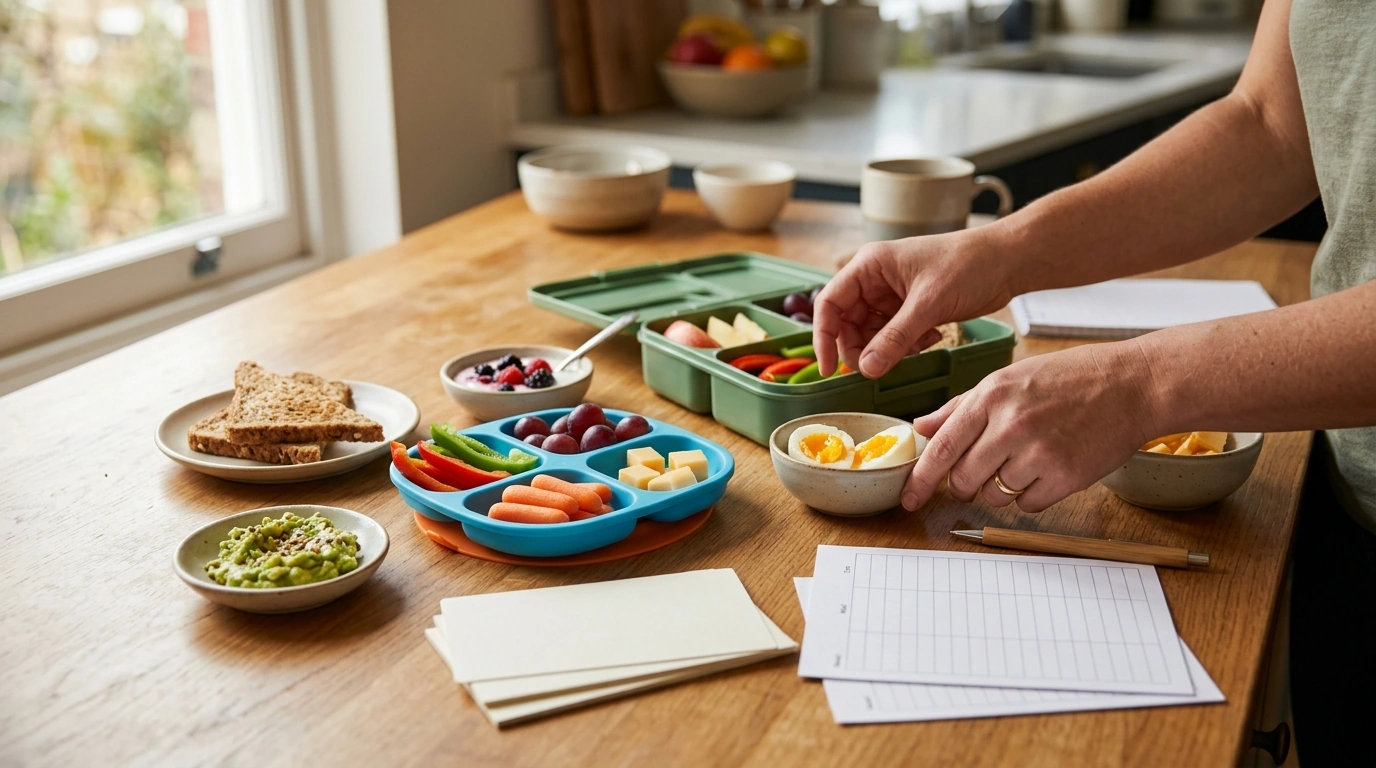
Packable meals work best when you simplify the target. A “3-part lunch” can cover most needs: main (protein + carb) + produce + fun crunch (plus water).
- Choose packable proteins. Hard-boiled eggs, beans, edamame, shredded chicken, yogurt, cheese, hummus, and nut/seed butter (if school policy permits).
- Add at least one no-prep produce. Bananas, grapes, baby carrots, and snap peas make packing sustainable.
- Snack strategy: Pair fiber + protein/fat to reduce crashes (fruit + yogurt, crackers + cheese, hummus + veggies).
If mornings are chaotic, prep a short “lunch formula list” for kids to pick from (two mains, three fruits/veggies, two crunchy add-ons). Choices feel empowering without turning packing into a daily negotiation.
Helping picky eaters without turning meals into battles
A weekly routine that makes healthy meals easier to maintain
Helpful add-ons for busy parents
If your family schedule includes frequent trips (tournaments, visits, vacations), it can help to keep organization tools in one place. For travel planning support, consider The Smart Bundle to Avoid Travel Scams: 3-in-1 Digital Guide, Checklist & AI Tools to streamline checklists and reduce last-minute stress—so meal routines are easier to maintain on the go.
FAQ
How do balanced meals differ for toddlers vs. school-age kids?
The same basic components apply (produce, protein, grains/starch, and dairy/fortified alternatives), but toddlers need softer textures, extra choking-safety attention, and smaller portions. School-age kids can typically handle more variety and larger servings, but appetite should still guide how much they eat.
What if my child refuses vegetables at dinner?
Keep offering vegetables in a low-pressure way and aim for progress over time rather than a single meal win. Try a familiar “safe” form (raw with dip, roasted, or blended into sauce) and remember that veggie intake can also happen at snacks and lunches.
How can healthy kids meals be done on busy weeknights?
Rely on component meals: a quick protein (rotisserie chicken, eggs, beans), a fast produce option (frozen or pre-cut), and an easy grain/starch (toast, microwave rice, tortillas). Using consistent meal templates—and a guide that standardizes grocery lists—makes weeknights far more manageable.
Recommended for you


Fun Chore System for Kids: Quick Setup, Less Arguing
Aug 10, 2026













Leave a comment