-
Shop
- Advanced Technologies
- AI Skills
- AI Skills Mastery 2026 Collection
- Bathroom
- Best-Sellers
- Car Accessories
- Confidence
- Dating & Social Skills
- Digital Resources
- AI & Technology
- Beauty
- Budgeting & Saving
- Car Buying & Ownership
- Electronics & Technology
- Entrepreneurship & Business Growth
- Financial Independence
- Financial Mindset & Psychology
- Goal Setting
- Home Styling & Organization
- Kitchen & Recipes
- Leadership
- Mindset
- Online Business
- Parenting & Child Development
- Personal Style & Fashion
- Pet Lifestyle & Wellness
- Positive Thinking
- Sleep Improvement
- Smart Life with AI
- Stress Management & Relaxation
- Wellness
- Yoga & Mind-Body Practices
- Education & Learning
- Family & Parenting
- Fashion
- Financial Education
- Furniture
- Gadgets
- Health & Beauty
- Health & Wellness
- Home & Garden
- Home Electronics
- Kids & Babies
- Kitchen
- Kitchen Best-Sellers
- Lighting
- Luxury Brands Collection
- Patio, Lawn & Garden
- Personal Growth
- Pet Care
- Pet Supplies
- Pets
- Sport & Outdoors
- Stress Relief & Relaxation
- Travel
- Travel & Adventure
- Wealth
- Popular
- Best deals
Montessori Wood & Silicone Play Kitchen Set for Girls
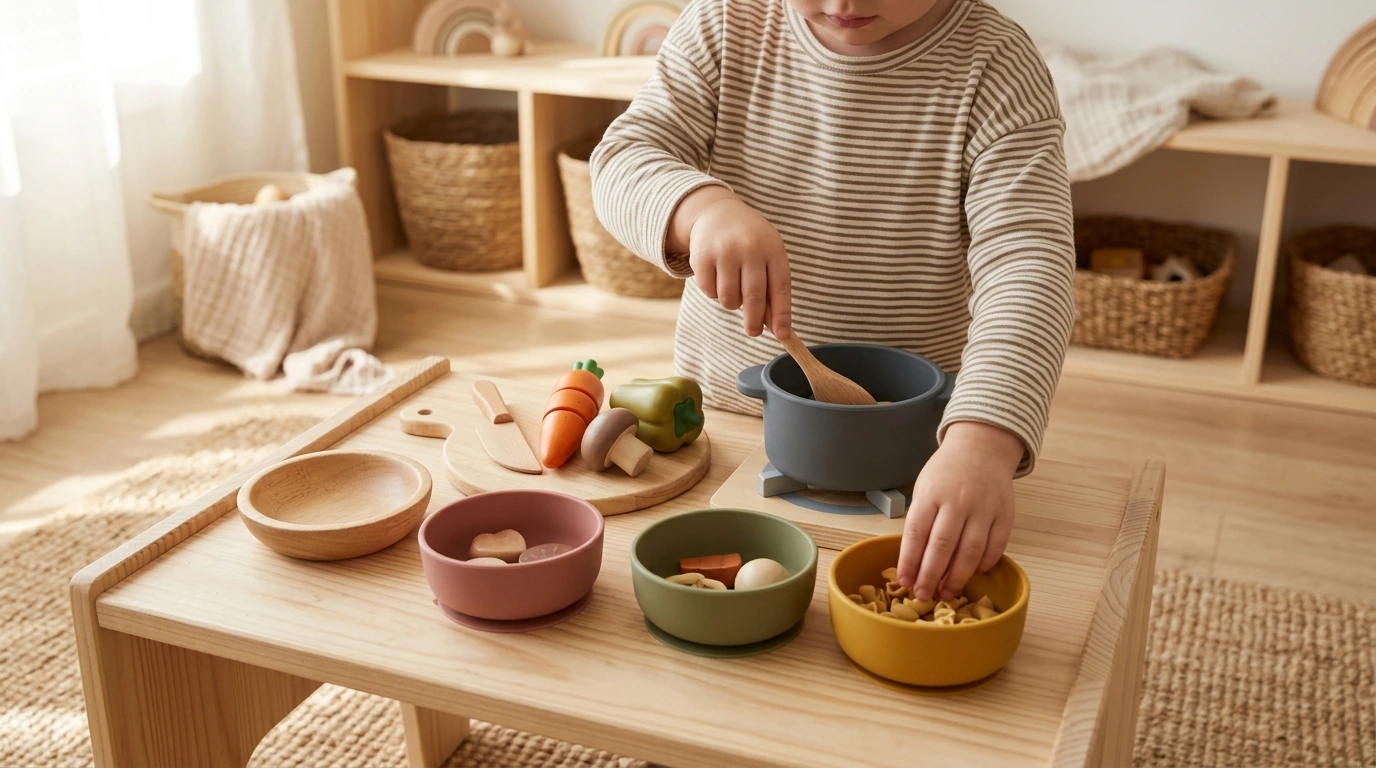
Montessori Wooden & Silicone Kitchen Playset for Girls – Pretend Cooking Toy Set
A pretend kitchen set can do more than keep little hands busy—it can build practical life skills, language, and confidence through everyday role play. This Montessori-inspired wooden and silicone playset is designed for hands-on “real world” practice: gripping utensils, sorting foods, naming tools, and following simple steps like “wash, cut, cook, serve.” The mix of sturdy wood and soft silicone also supports sensory exploration while keeping play gentle on small hands and tabletops.
Why pretend cooking supports Montessori-style learning
Pretend cooking naturally mirrors what children observe at home, which makes it an easy, inviting way to practice Montessori-aligned skills without needing formal instruction or complicated rules.
- Practical life practice: Scooping, stirring, pouring, and serving echo real routines children see daily.
- Fine-motor development: Grasping utensils, transferring items, and placing pieces with control strengthen the same hand muscles used later for writing and self-care tasks.
- Language growth: Naming ingredients, tools, and actions (“slice,” “mix,” “boil”) builds vocabulary and supports sequencing.
- Independence and confidence: Children can complete “recipes” and set up play from start to finish, reinforcing a capable mindset.
- Social skills: Turn-taking, sharing, and polite phrases (“Would you like some?”) tend to emerge during pretend meals.
For a helpful overview of choosing toys that support development and healthy play, see the American Academy of Pediatrics guidance: Selecting Appropriate Toys for Young Children.
Wood + silicone: a tactile combo that works for play kitchens
Mixed-material play pieces add variety in how a set feels and sounds, which can keep engagement high while supporting gentle, controlled movements.
- Stable wooden pieces: Wood often feels substantial, helping children slow down and place, stack, and serve with intention.
- Soft-touch silicone: Silicone elements are typically quieter when tapped together and feel gentler for younger kids still refining coordination.
- Easy sensory language: Mixed materials make it simple to introduce words like “smooth,” “soft,” “heavy,” and “light.”
- More forgiving play: Softer items can reduce the “oops” factor when pieces bump, tumble, or land on a tabletop.
- Better long-term use: Look for smooth edges, securely attached components, and surfaces that wipe clean after play.
Quick look: what to check in a pretend cooking set
| What to look for | Why it matters | Practical tip |
|---|---|---|
| Smooth, rounded edges | Helps reduce scrapes during energetic play | Run a finger along corners before first use |
| Easy-to-wipe materials | Keeps pretend food and utensils hygienic | Use a damp cloth and mild soap; dry fully |
| Pieces sized for small hands | Supports a natural grip and better control | Choose items that fit comfortably in the palm |
| Balanced mix of tools and food | Encourages varied story play and longer engagement | Rotate a few items weekly to refresh interest |
| Sturdy construction | Prevents frustration from parts slipping or breaking | Store in a bin or tray to avoid lost pieces |
For general toy safety reminders (especially about age-appropriateness and supervision), review the U.S. Consumer Product Safety Commission toy safety resources: CPSC Toy Safety.
Play ideas that build real skills (without making it feel like practice)
The best pretend play invitations are simple, repeatable, and open-ended. A short prompt can spark long, focused play—then children naturally add complexity on their own.
- “Order up” restaurant: One child takes the order, another “cooks,” and someone serves—perfect for role switching and conversation.
- Color and category sorting: Group foods by color, “breakfast vs. dinner,” or “fruits vs. veggies” to build early classification skills.
- Step-by-step recipes: Use 3–5 steps like “wash → cut → cook → plate → serve” to practice sequencing.
- Counting and early math: Count servings, set a table for 2–4, or trade pretend “coins” for menu items.
- Clean-up routine: Make “reset the kitchen” part of the game—returning items builds responsibility and order.
Age considerations and how to set up the play space
A thoughtful setup can turn a toy set into a self-serve activity children can choose, use, and put away with minimal help—an especially Montessori-friendly rhythm.
- Toddlers: Prioritize simple actions like stirring, transferring, and serving. Offer a smaller selection at a time to reduce overwhelm.
- Preschoolers: Add roles (chef, helper, customer) and longer storylines. A notepad for “orders” and simple “menus” can extend play.
- Shared play: If possible, add duplicates of high-demand tools (like a spoon) to reduce conflict during playdates or sibling play.
- Defined area: A low shelf, tray, or small bin helps children independently choose, use, and return the set.
- Safety basics: Use age-appropriate pieces and avoid mixing with real kitchen tools unless closely supervised.
For families interested in the Montessori philosophy behind independence and hands-on learning, the Association Montessori Internationale provides a clear overview: AMI Montessori approach.
Gifting guide: when this playset makes a great choice
Product highlight: Montessori Wooden & Silicone Kitchen Playset
Montessori Wooden & Silicone Kitchen Playset for Girls – Pretend Cooking Toy Set (Price: $36.51)
More in-stock picks to consider
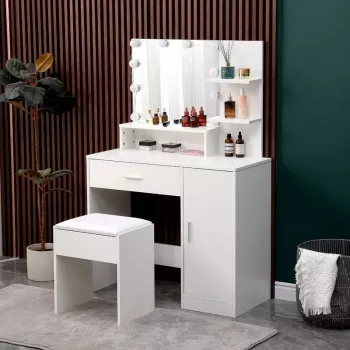
- Modern White Vanity Makeup Table Set with Lighted Mirror and Storage
- The Smart Bundle to Avoid Travel Scams: 3-in-1 Digital Guide, Checklist & AI Tools
FAQ
What age is a Montessori-style kitchen playset best for?
Most Montessori-style pretend kitchen sets work well from toddler through preschool years, as long as the pieces are sized appropriately. For younger toddlers, offer only a few items at a time and supervise closely to keep play simple and safe.
How should wooden and silicone toy kitchen items be cleaned?
Wipe pieces with a damp cloth and mild soap, then dry fully. Avoid soaking wooden parts, and check any manufacturer care notes; regularly inspect items for cracks, loosening parts, or wear.
How can pretend cooking encourage learning without turning into a lesson?
Use light prompts—roles, a short “recipe” with a few steps, or a quick sorting game—then follow the child’s lead. Keep language natural by naming tools and actions as you play together.













Leave a comment