-
Shop
- Advanced Technologies
- AI Skills
- AI Skills Mastery 2026 Collection
- Bathroom
- Best-Sellers
- Car Accessories
- Confidence
- Dating & Social Skills
- Digital Resources
- AI & Technology
- Beauty
- Budgeting & Saving
- Car Buying & Ownership
- Electronics & Technology
- Entrepreneurship & Business Growth
- Financial Independence
- Financial Mindset & Psychology
- Goal Setting
- Home Styling & Organization
- Kitchen & Recipes
- Leadership
- Mindset
- Online Business
- Parenting & Child Development
- Personal Style & Fashion
- Pet Lifestyle & Wellness
- Positive Thinking
- Sleep Improvement
- Smart Life with AI
- Stress Management & Relaxation
- Wellness
- Yoga & Mind-Body Practices
- Education & Learning
- Family & Parenting
- Fashion
- Financial Education
- Furniture
- Gadgets
- Health & Beauty
- Health & Wellness
- Home & Garden
- Home Electronics
- Kids & Babies
- Kitchen
- Kitchen Best-Sellers
- Lighting
- Luxury Brands Collection
- Patio, Lawn & Garden
- Personal Growth
- Pet Care
- Pet Supplies
- Pets
- Sport & Outdoors
- Stress Relief & Relaxation
- Travel
- Travel & Adventure
- Wealth
- Popular
- Best deals
Louis Vuitton Authentication Workflow: Fast, Repeatable Checks

Counterfeits have become harder to spot, especially in online resale and peer-to-peer marketplaces. A reliable authentication approach focuses on repeatable checkpoints—materials, construction, codes, stamps, hardware, and seller documentation—so decisions are based on evidence rather than “overall feel.” The workflow below is designed to help screen listings quickly, then verify details more deeply once an item is in hand.
Who This Verification Method Helps Most
- Resale shoppers comparing multiple listings quickly without missing key red flags
- Collectors verifying older pieces where wear and repairs can complicate assessment
- Gift buyers who want confidence before the return window closes
- Sellers who need consistent standards before listing items as authentic
A Practical Authentication Workflow (Fast, Repeatable, Evidence-Based)
Luxury verification works best when it’s structured. Instead of hunting for one “magic tell,” stack multiple checkpoints that should all agree with one another.
- Start with listing context: review seller history, return policy, the quality/quantity of photos, and any third-party proof. If the listing avoids specifics, treat that as data.
- Confirm model details: compare silhouette, proportions, pocket layout, and closure style with reliable references for the exact model and size.
- Check materials: evaluate canvas texture and coating behavior, leather trim grain and edges, lining type, and stitching thread appearance.
- Inspect construction: look for seam alignment, symmetry, consistent stitch count, clean edge paint, and reinforcement points that match known authentic builds.
- Validate identifiers: review date code format/placement (where applicable), heat stamps, interior labels, and typography spacing.
- Assess hardware: check engraving depth, font shape, plating tone, zipper pull details, and fastener function (smooth but firm, not gritty or loose).
- Cross-check condition: wear patterns should match materials and age; mismatched patina or “too new” replacement parts can signal repairs—or worse.
- Decide with a confidence score: require multiple consistent positives rather than a single pass/fail detail. If two or more major areas conflict (materials vs. stamps, or hardware vs. construction), pause and verify further.
For general consumer protection guidance while shopping online, the Federal Trade Commission’s resource on shopping online is a helpful baseline for documenting listings, payments, and disputes.
Common Counterfeit Red Flags to Spot Early
- Photos that avoid close-ups of stamps, zipper pulls, rivets, or interior pockets
- Incorrect typography: uneven letter spacing, shallow embossing, inconsistent font thickness
- Misaligned patterns or poor symmetry on monogram placement and seam joins
- Overly shiny or “plastic” canvas feel, or leather trim that looks painted rather than natural
- Hardware that feels light, has rough edges, or shows mismatched finishes across parts
- Date code inconsistencies (when present): wrong format, improbable location, or poor stamping quality
- Packaging used as “proof” (boxes/dust bags can be counterfeit and should never be the deciding factor)
Counterfeit goods aren’t just a pricing issue; they can be tied to broader fraud and safety problems. U.S. Customs and Border Protection maintains a primer on counterfeit goods and why they’re risky.
Item-Specific Checkpoints (Bags, Wallets, Accessories)
Different item categories have different “failure points.” Use the map below to prioritize what to inspect first when time is limited.
| Item type | Top areas to inspect | What to compare |
|---|---|---|
| Bags | Handles, piping, zipper pulls, lining, stamps | Symmetry, stitch consistency, engraving depth, lining seams |
| Wallets/SLGs | Edge paint, card slots, snaps, interior stamp | Clean edges, uniform spacing, crisp embossing, aligned hardware |
| Belts | Buckle, hole finishing, backing leather, screws | Engraving quality, clean holes, consistent finish, secure assembly |
| Accessories | Tags/labels, clasps, finishing, materials | Accurate typography, smooth closures, consistent materials and wear |
Quick notes by category
- Bags: pay attention to handle attachment points, the neatness of piping at corners, and whether lining seams sit straight without rippling.
- Wallets and small leather goods: edge paint should look controlled (not thick or wavy), and card slots should be evenly cut and aligned.
- Belts: buckle engravings and edge stitching often reveal quality gaps; also check whether screws and assemblies look intentional and consistent.
- Scarves and textiles: look for clean hems, accurate print registration, and label stitching that sits straight and secure.
How the Louis Vuitton Verification Guide eBook Supports Faster, Safer Decisions
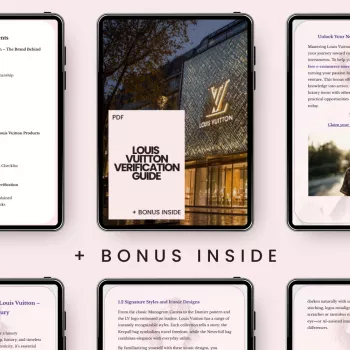
When evaluating multiple listings, a compact checklist-driven reference can prevent missed details and inconsistent judgment. The Louis Vuitton Verification Guide – Essential eBook to Master the Art of Authenticating Louis Vuitton Luxury Items is designed to help build a repeatable routine that works whether you’re screening photos before purchase or verifying an item during the return window.
For shoppers who also want a broader layer of protection against common purchase and travel-related fraud patterns, The Smart Bundle to Avoid Travel Scams: 3-in-1 Digital Guide, Checklist & AI Tools can complement a verification routine with practical safety checks.
Buying Safely on Resale Platforms
For clarity on brand-related terms and official information, Louis Vuitton posts official notices via its Legal Notice page.
FAQ
Can a date code confirm a Louis Vuitton item is authentic?
No—when present, a date code is only one checkpoint. Counterfeits can imitate formats, and some items or eras may differ, so it should be cross-checked against materials, construction quality, stamps, and hardware.
What photos should be requested from a seller before buying?
Request full front/back/side shots plus close-ups of the heat stamp, interior label areas, zipper pull engravings, rivets, stitching, lining seams, and the date/serial code area if applicable. Also ask for photos of wear-prone zones like corners, handles, and strap attachment points.
Is packaging proof of authenticity?
No—boxes, dust bags, and even receipts can be replicated. Packaging can support the seller’s story, but the item’s materials, construction, stamps, and hardware should be the deciding evidence.














Leave a comment