-
Shop
- Advanced Technologies
- AI Skills
- AI Skills Mastery 2026 Collection
- Bathroom
- Best-Sellers
- Car Accessories
- Confidence
- Dating & Social Skills
- Digital Resources
- AI & Technology
- Beauty
- Budgeting & Saving
- Car Buying & Ownership
- Electronics & Technology
- Entrepreneurship & Business Growth
- Financial Independence
- Financial Mindset & Psychology
- Goal Setting
- Home Styling & Organization
- Kitchen & Recipes
- Leadership
- Mindset
- Online Business
- Parenting & Child Development
- Personal Style & Fashion
- Pet Lifestyle & Wellness
- Positive Thinking
- Sleep Improvement
- Smart Life with AI
- Stress Management & Relaxation
- Wellness
- Yoga & Mind-Body Practices
- Education & Learning
- Family & Parenting
- Fashion
- Financial Education
- Furniture
- Gadgets
- Health & Beauty
- Health & Wellness
- Home & Garden
- Home Electronics
- Kids & Babies
- Kitchen
- Kitchen Best-Sellers
- Lighting
- Luxury Brands Collection
- Patio, Lawn & Garden
- Personal Growth
- Pet Care
- Pet Supplies
- Pets
- Sport & Outdoors
- Stress Relief & Relaxation
- Travel
- Travel & Adventure
- Wealth
- Popular
- Best deals
Cat Tower Buying Guide: Stable, Cozy Picks for Any Cat
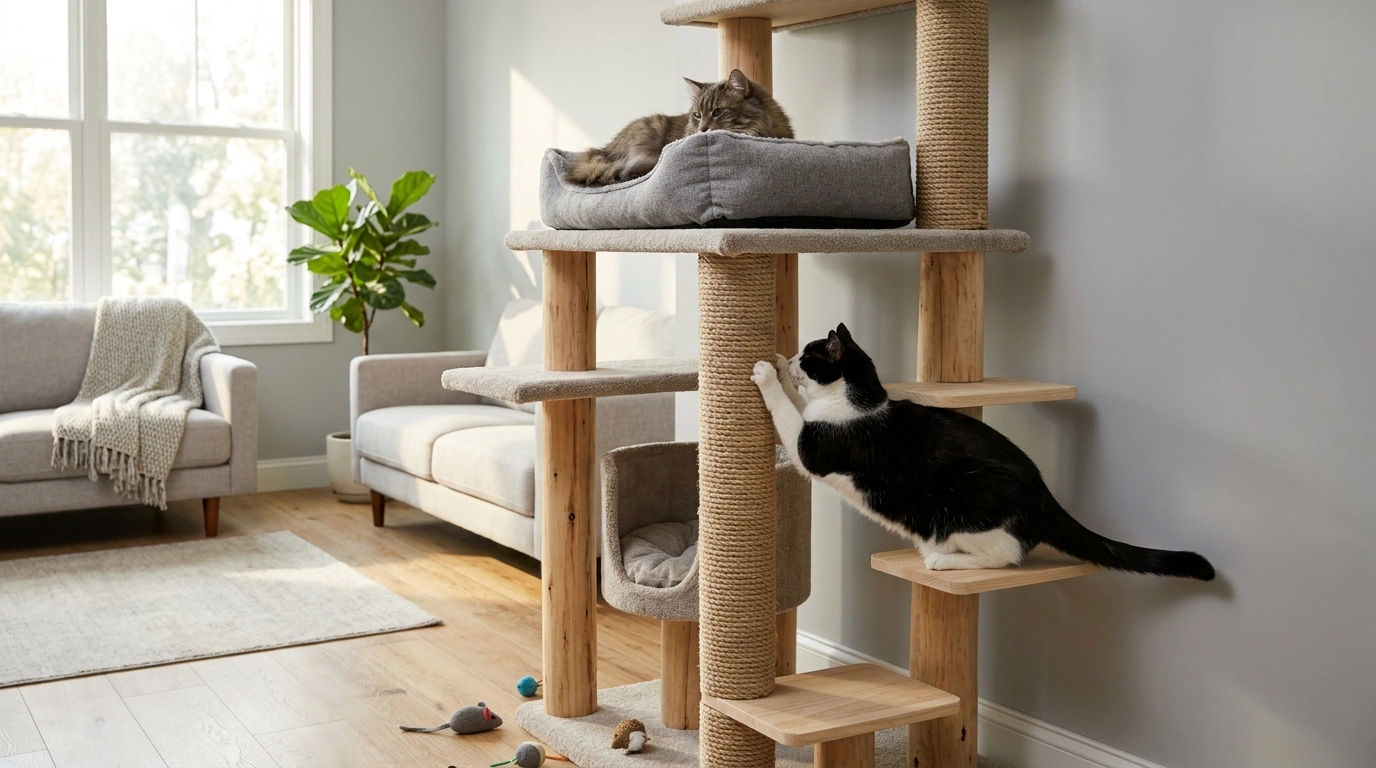
Cat Towers That Keep Cats Active, Secure, and Comfortable
A well-designed cat tower gives cats vertical territory for climbing, lounging, scratching, and observing the room. The best choice balances stability, surfaces that support healthy scratching, and perch sizes that match the cat’s body—especially for larger breeds that need wider platforms and sturdier construction.
What a Cat Tower Adds to Daily Life
Cat towers do more than “give cats a place to sit.” They add usable vertical territory, which can make a home feel calmer and more predictable for feline routines.
- Creates vertical space that can reduce tension in multi-cat homes by offering multiple levels and escape routes
- Supports natural behaviors: climbing, perching, hiding, stretching, and scratching
- Helps protect furniture by offering attractive scratch-ready posts and surfaces
- Encourages movement and play, which can support healthy weight and joint mobility
- Provides resting spots that feel safer than floor-level beds for many cats
For more on why enrichment and predictable “safe zones” matter, see the American Association of Feline Practitioners (AAFP) Feline Behavior Guidelines.
Choosing the Right Size and Layout (Especially for Big Cats)
The fastest way to waste money on a cat tower is buying one that’s too narrow, too tall for the cat’s mobility, or too wobbly to feel safe. Bigger cats, in particular, need room to turn around, sprawl, and jump without flexing the structure.
- Match platform dimensions to the cat’s body: larger cats do better with wide perches and deeper beds so paws and hips aren’t hanging off
- Prioritize a heavy base and solid connections between levels to prevent wobble during launches and landings
- Look for sensible step spacing: cats should be able to climb without long, awkward jumps between levels
- Include more than one comfortable resting level if the tower will be shared by multiple cats
- If senior cats will use it, favor lower first steps, thicker platforms, and stable ramps/steps over tall gaps
| Cat & Home Situation | Tower Features to Prioritize | Common Mistakes to Avoid |
|---|---|---|
| Large/stocky cat (e.g., Maine Coon-type build) | Extra-wide perches, reinforced posts, heavy base, roomy cubby/bed | Narrow platforms, thin posts, lightweight base that tips |
| Multi-cat home | Multiple perches at similar heights, two+ scratching zones, more than one route up/down | Single top perch that becomes a “resource” to guard |
| Apartment or small room | Vertical footprint with compact base, wall-adjacent placement, fewer but usable levels | Oversized tower that blocks walkways or sits too far from a wall for stability |
| Senior cat | Lower steps, grippy surfaces, stable platforms, easy-access lounging spots | Tall designs that require repeated long jumps |
Materials and Build Quality That Matter
Two towers can look similar online, yet feel completely different once a cat hits it at speed. Focus on the parts that take the most force: base, posts, and the way platforms are supported.
- Posts: thicker posts generally withstand stronger scratching and heavier cats better than slim columns
- Covering: sisal rope or durable sisal fabric is typically preferred for scratching; plush is comfortable for lounging but may not hold up as a primary scratch surface
- Fasteners and frame: look for secure bolts/screws and solid internal supports that keep platforms from twisting over time
- Edges and seams: reinforced corners and tight fabric wrapping reduce fraying and wobble
- Safety checks: no sharp staples, exposed nails, or dangling strings that could be chewed
For practical scratching and enrichment guidance, the ASPCA cat care resources are a reliable reference point.
Comfort Features Cats Actually Use
A tower earns its keep when cats choose it on their own—especially for resting and scratching. Features that tend to get daily use are simple, stable, and sized correctly.
- High perch with a clear view: many cats gravitate to the highest stable point for observation
- Cubby/condo: privacy helps shy cats decompress and can give cats a break from household traffic
- Hammock or bowl-style bed: great for curl-up sleepers, but it must be sized to avoid sagging uncomfortably for bigger cats
- Multiple scratch zones: place at least one zone where the cat can fully stretch from shoulders to toes
- Removable toys: dangling toys can boost engagement, but removable is easier to replace and safer to maintain
International Cat Care also emphasizes the value of meeting environmental needs through climbing, hiding, and observation points; see their enrichment guidance at International Cat Care.
Where to Place a Cat Tower for Maximum Use
Placement often matters as much as the tower itself. The “best” tower can be ignored if it’s tucked away from the cat’s daily routes.
Introducing the Tower and Keeping It in Good Shape
A Sturdy Option Built for Bigger Cats
Cat Tower for Big Cats is a solid starting point when you want wider lounging surfaces and a more confidence-inspiring feel for heavier cats.
Helpful Home Add-On for Pet Parents
Modern White Vanity Makeup Table Set with Lighted Mirror and Storage can double as a neat storage station for everyday pet-care items in a bedroom or dressing area, so essentials stay accessible without cluttering surfaces.
FAQ
How tall should a cat tower be?
Choose a height that gives at least one confident lookout perch while staying stable in the room; taller isn’t better if it wobbles. Match the height to the cat’s mobility and the available wall-adjacent placement.
What makes a cat tower stable enough for a large cat?
A heavy, wide base; thick posts; solid platform supports; and tightly secured fasteners are key. Placing the tower near a wall also helps reduce sway during jumping and scratching.
How do you get a cat to use a new tower instead of the couch?
Put the tower where the cat already hangs out, reward interaction with treats or play, and make scratch posts more appealing with sisal and full-stretch height. Temporarily covering the usual couch scratch spot can help the habit shift faster.













Leave a comment